CTO Mode

CTO Mode

By CTOs, for CTOs

Editor’s Primer

Nvidia GTC opens today with Vera Rubin production timelines and a surprise laptop CPU, Replit triples to $9B on real vibe-coding revenue, and xAI raids Cursor's leadership after Musk admits the tool was "not built right." In today's brief: Meta's reportedly shopping for a Gemini license - what happens to your AI roadmap when open-weight's biggest champion goes proprietary?


Today’s Signal

01

Nvidia GTC 2026 Opens Today with Vera Rubin, NemoClaw, and Laptop CPU Expected

The most consequential hardware event of the year. Watch for Vera Rubin production timelines, NemoClaw enterprise agent platform, a new inference chip, and Nvidia's first Arm laptop CPU. Each announcement reshapes what you can build and what it'll cost.

Infrastructure

02

Meta Delays Avocado AI Model to May, Reportedly Discusses Licensing Google Gemini

Meta's flagship model trails Gemini 3.0, OpenAI, and Anthropic on reasoning and coding. The possible Gemini licensing signals a real shift - the open-source champion may be going proprietary. If you built on Llama's trajectory, reassess the roadmap.

AI / ML

03

Replit Raises $400M at $9B Valuation, Launches Agent 4 with $1B ARR Target

Tripled valuation in six months. ARR went from under $3M to $150M in a year, now targeting $1B. Vibe coding isn't a meme anymore - it's a business model with 50M users and Fortune 500 adoption. Worth watching how this reshapes internal tool development.

Funding

04

Adobe CEO Shantanu Narayen to Step Down After 18 Years Amid AI Pressure

Stock down 23% YTD as the SaaS-mageddon narrative deepens. Narayen led the SaaS transition but the AI transition requires a different bet. Who Adobe picks next will signal whether incumbents fight the agent disruption wave or try to ride it.

Business

05

xAI Poaches Two Senior Cursor Leaders as Musk Admits Coding Tool 'Not Built Right'

Nine of eleven xAI co-founders gone. Musk hired Cursor's product engineering leads to rebuild from scratch. The AI coding tool market is now a brutal talent war between Cursor, Claude Code, and Codex. Platform risk is real if you depend on any of them.

DevEx

06

Apple Quietly Cuts China App Store Commission from 30% to 25% After Regulator Discussions

No drama, no malicious compliance - just a 5-point cut effective March 15. Contrast this with Apple's combative EU stance. If you ship apps in China, the margin improvement is immediate. Globally, it signals the 30% rate is increasingly indefensible.

Platform

The Brief

Open-Weight AI's Single Point of Failure

By Jason Xi  ·  4 min read  ·  OPINION

Zuckerberg's July letter included a sentence that should concern anyone with Llama in their production stack: "We'll need to be careful about what we choose to open source." That's not a safety disclaimer. That's a strategy change wearing one.

Meta's open-weight play was never philanthropy - it was classic commoditize-the-complement. Zuckerberg said it explicitly: standardize the industry on Meta's tools so Google and OpenAI can't monetize theirs. As long as Meta didn't need to sell AI directly, giving it away made strategic sense. But Meta's now spending $115-135B on AI infrastructure in 2026, comparable to the cloud giants, except without a cloud business to monetize it. Their new "Avocado" model is explicitly proprietary. The most likely outcome is freemium: frontier models behind an API, older versions released open-weight. The Llama you'll get going forward is last season's inventory, not the flagship.

The numbers already reflect this. Open-source models power just 13% of enterprise AI workloads, down from 19% six months ago. Llama holds 9% enterprise market share despite 1.2 billion downloads. Anthropic alone captures 42% of enterprise coding workloads. The chasm between "downloaded Llama" and "running Llama in production" was already enormous before this shift. Meta going proprietary doesn't create the problem - it removes the hope that the problem was temporary.


If you built your AI roadmap around the assumption that competitive open-weight models from a trusted Western provider would keep improving indefinitely, you built on someone else's commoditization strategy.

The optimistic counter is that open-weight supply has diversified. Partially true. Nvidia's committing $26B to open models like Nemotron, but those are optimized for Nvidia hardware - it's the Android playbook. Chinese labs keep releasing competitive weights, but most Western enterprises won't deploy Chinese-origin models on anything touching customer data. Mistral is strong but operates at a fraction of Meta's scale. The thing that made Llama strategically unique wasn't just that it was open. It was that it came from a tech giant with no competing cloud business and no reason to hold back. Every replacement has a different incentive structure, and you need to understand what you're actually trading for.

That's not a foundation. It's a dependency you forgot to flag. This quarter, audit every place "open-source model" appears in your planning docs and ask what the actual fallback is when the next Llama release isn't competitive.

Hidden Gem

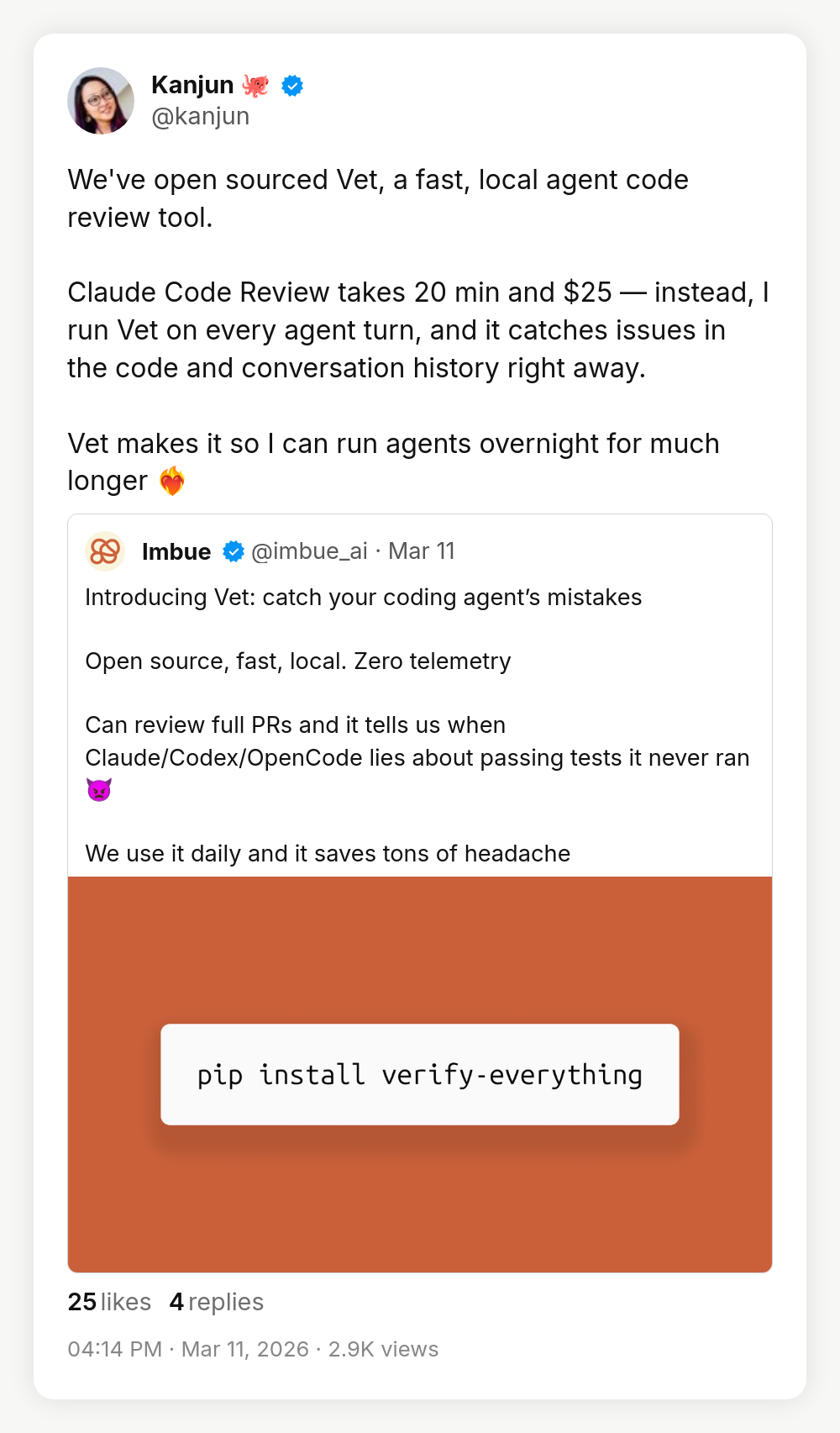
Hidden Gem Tweet

Thanks for reading today’s edition of CTO Mode. If you’d like to advertise to our readers, please reach out.

Meme

Keep reading