|
The Brief
Your Next AI Vendor Is Probably a Claude Wrapper
By Adam Placker · 3 min read · OPINION
Okara launched its "AI CMO" last week to nearly 8 million views. The pitch: a $99/month autonomous agent that replaces your marketing team. The reality, once anyone actually used it: a Claude wrapper with Firecrawl access that generates outdated recommendations, struggles with basic connectivity, and occasionally suggests you tweet promotional content about Okara itself.
This is where AI startups are right now. The product isn't the differentiator - the launch video is.
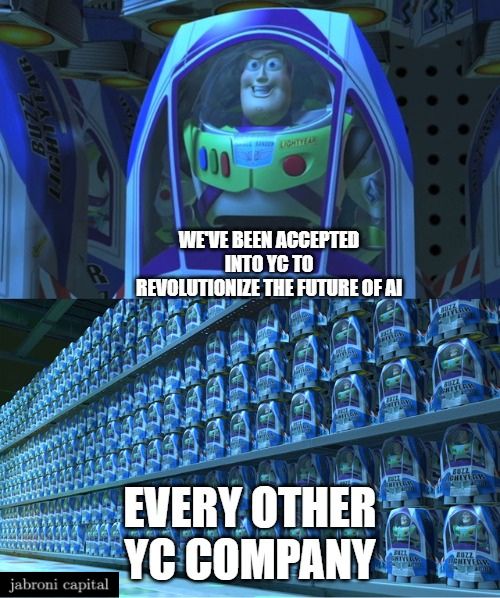
When anyone can prompt-build a working product in a weekend with Claude Code, the hard part isn't shipping. It's convincing people what you shipped matters. That incentive structure is producing an ecosystem where marketing ability has completely decoupled from technical depth. Garry Tan open-sourced a folder of prompts called GStack and it pulled 20,000 GitHub stars and hit #3 on Product Hunt. Not because it contains anything a competent Claude Code user doesn't already have - one vlogger called it "a bunch of prompts" in a text file - but because Tan is the CEO of YC. Orchid, itself a YC company, plasters "loved by users of Claude, Ramp, Cursor" on its landing page. Not because those companies are customers - because some individuals who happen to use those products also tried Orchid. Technically not lying. Functionally dishonest.
| |
The real cost here isn't bad products - it's eroded trust.
|
|
The correction is already visible. Series A shutdowns jumped from ~6% to ~14% of all closures, a 2.5x year-over-year increase, and the dominant pattern is AI wrappers with no moat. Google's Darren Mowry told TechCrunch that companies white-labeling foundation models have their "check engine light" on. Investors are openly saying they won't fund interface layers without proprietary data or deep workflow integration. The market is starting to filter. But the damage to signal-to-noise is already done.
Not every wrapper is worthless. Cursor wraps foundation models but has built genuine depth through UX and developer workflow design. The test I keep applying: could I rebuild this in a weekend with the raw API? If yes, it's not a product. It's a demo with a Stripe link.
I evaluate tools constantly. When every third startup fakes social proof, publishes zero performance data, and ships something indistinguishable from a well-crafted system prompt, it poisons the well for founders actually building something defensible. Marketer Ole Lehmann tried Okara and put it perfectly: everything it recommended was outdated, generic, and "outright a bad idea." His conclusion? "I hope my competition uses the AI CMO so I can crush them."
When domain experts try your product and root for their competitors to adopt it, you don't have a company. You have a landing page.
|